Pause. Acknowledge. Pivot.
Three words for the moment something stings, before the old reaction takes over.
 By Yume Huang · Aslan Studies

Some reactions feel like they happen to us. A message lands, a comment stings, and before we've thought about it we've already replied, or gone quiet, or said the thing we'll spend the evening wishing we hadn't.
Often it's the same reaction every time. That's what makes it a pattern. And a pattern isn't proof that something is wrong with you. The things that kept repeating in my life were trying to tell me something. Listening to them helped more than fighting them.
But listening takes a few seconds the pattern doesn't usually give you. That's what these three words are for.
Pause
Don't reply yet. Don't decide yet. Breathe out slowly, three times.
The long out-breath matters. A reaction starts in the body before it reaches your words: the tight jaw, the quick breath, the heat in your face. Slowing your breath out is one of the simplest ways to tell your body there's no emergency. I couldn't think my way out of patterns my body was holding. When I calmed my body first, my mind followed.
Acknowledge
Name what you feel in one word. Hurt. Embarrassed. Afraid. Tired. Then notice where you feel it in your body.
You don't need to solve the feeling or explain it. Naming it is enough. The psychologist Robert Kegan describes growth as the slow move from being run by something to being able to look at it. Naming a feeling is a small version of that move. What was running you becomes something you can see.
The pivot isn't about being calm or perfect. It's about choosing.
Pivot
Ask yourself: what would I choose here if I weren't in a hurry? Then do only that.
Sometimes the answer is to reply kindly. Sometimes it's to reply tomorrow. Sometimes it's to say nothing at all. The pivot isn't about being calm or perfect. It's about choosing, instead of letting the old pattern choose for you.
It gets easier with practice
You won't catch every moment. Nobody does. But each time you do, the space between what happens and what you do gets a little wider, and the old reaction gets a little quieter.
I'm a researcher and lived-experience practitioner, not a clinician. What I share here is for understanding and reflection, not treatment.
Founder of Aslan Studies and author of Structure First. I share what I've studied and what's worked for me so far. Write to me any time.
The free book
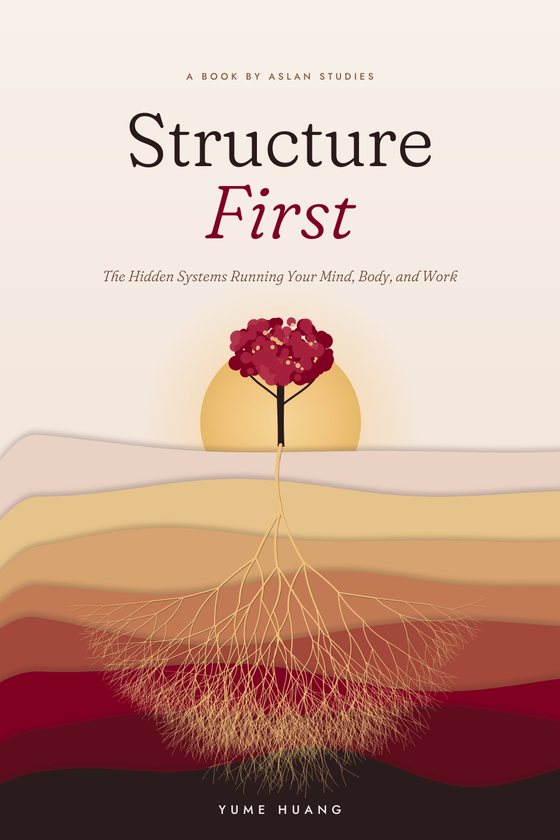
Structure First
This piece draws on The Logic of the Loop, chapter five of the book. 190 pages on the hidden systems running your mind, body and work, free to read.
Read it freeWorkshops · Coming soon
Learn it together.
Small, unhurried sessions on rest, energy and the patterns underneath. Join the waitlist to hear first.
Join the waitlist