What Phineas Gage can teach us about tired days
In 1848, an iron rod went through a man's head. What it took tells us a lot about why trying harder stops working.
 By Yume Huang · Aslan Studies
On a September afternoon in 1848, a railway foreman named Phineas Gage was preparing a blast near Cavendish, Vermont. The job was routine: drill a hole in the rock, pour in the powder, pack it down with a long iron rod. He had done it so many times that his hands knew the steps without him.
He looked away for a moment. The iron struck a spark against the rock, and the powder went off.
The rod, more than a meter long, shot up through his left cheek, behind his eye, through the front of his brain and out the top of his skull. It landed several meters away.
Phineas Gage did not fall down. He sat up. He spoke within minutes. He sat upright in a chair while the doctor, John Harlow, treated the wound, and he described what had happened clearly. Within months, his body had healed.
He survived. Something else didn't.
Before the accident, the men who employed Gage called him their most capable and efficient foreman: shrewd, energetic, well-balanced, and respected by his crew.
Afterwards, his memory was intact. So was his speech. He knew exactly who he had been. But he couldn't hold on to a plan. He would propose something with great energy, drop it before he began, then propose something else. The people who knew him said it simply: he was "no longer Gage."
His skull and the iron rod are still on display at Harvard Medical School's Warren Anatomical Museum, more than 175 years later.
What the rod took
The rod damaged the part of the brain that lets us plan ahead, wait instead of grabbing the nearest thing, weigh what we want now against what we want later, and hold an intention steady over time.
This is the part of the story I keep coming back to. We usually treat good judgment, patience and focus as character. As discipline. As things we either have or we don't.
Focus and patience aren't only character. They depend on the body.
Gage's story points to something kinder. These abilities depend on the body. They rest on physical conditions, and they're among the first things to slip when those conditions aren't met. For most of us, it isn't an iron rod. It's short sleep, skipped meals, long stretches of stress, and no real rest.
When trying harder stops working
So when you can't focus, can't decide, or snap at someone you love, it may not be a flaw in you. It may be your conditions. And conditions are something you can build.
I used to rely on trying harder. What finally helped was building small supports around my days, so the effort could get lighter.
I'm a researcher and lived-experience practitioner, not a clinician. What I share here is for understanding and reflection, not treatment.
Founder of Aslan Studies and author of Structure First. I share what I've studied and what's worked for me so far. Write to me any time.
The free book
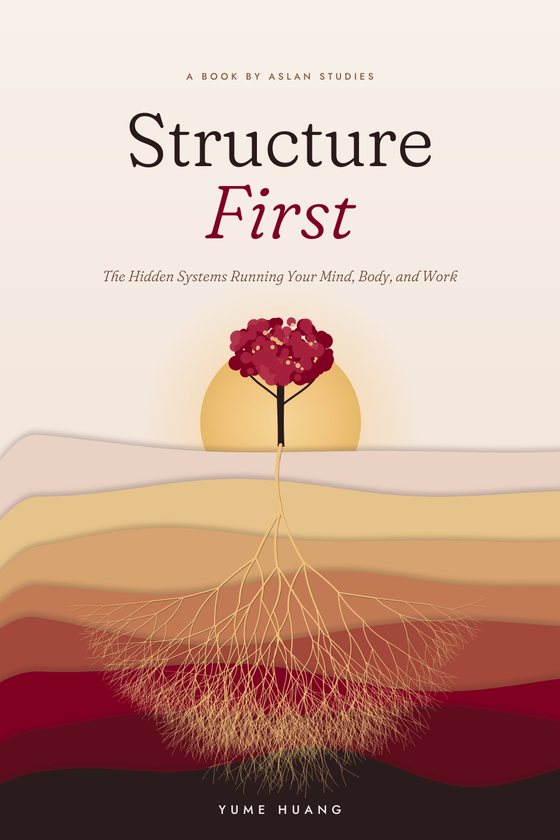
Structure First
This piece draws on The Machine Under Pressure, chapter one of the book. 190 pages on the hidden systems running your mind, body and work, free to read.
Read it freeWorkshops · Coming soon
Learn it together.
Small, unhurried sessions on rest, energy and the patterns underneath. Join the waitlist to hear first.
Join the waitlist